Your consumer unit will often give you warning before it becomes a real problem. Here are seven signs that should prompt a call to a qualified electrician.
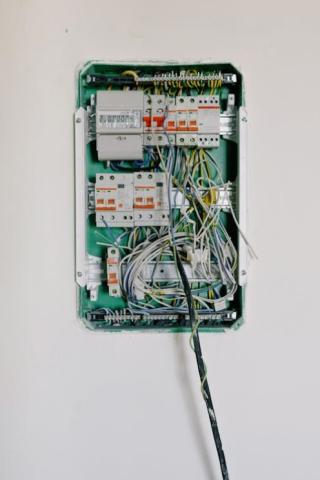
Your consumer unit — the fuse board — is the hub of your home's electrical system.
Most of the time it sits quietly doing its job, and most homeowners barely give it a second thought. But consumer units do give off warning signals when something is wrong, and knowing what to look out for can mean the difference between a straightforward repair and a much more serious situation. Here are seven things worth paying attention to.
The same breaker keeps tripping
An occasional trip is normal; it means the breaker has done its job by responding to a surge or overload. But if the same circuit trips repeatedly, or trips again shortly after being reset, something more persistent is going on. It could be a chronically overloaded circuit, a fault on the wiring, or a failing breaker. Resetting it and hoping for the best is not a solution.
The unit still uses rewirable fuses
Some older properties, particularly those built or last updated before the 1980s, still have a fuse board that uses ceramic fuse holders and lengths of replaceable fuse
wire rather than modern circuit breakers. These provide far less protection than a contemporary consumer unit, are not compatible with modern electrical demand, and will almost certainly be flagged on any EICR. An upgrade is a meaningful improvement to the safety of the whole installation.
There is no RCD protection
Residual Current Devices save lives. They respond to faults, including the kind caused by contact with a live conductor, within 40 milliseconds, cutting the supply before a fatal shock can occur. Modern consumer units are required to incorporate RCD protection across all circuits. If yours does not have it, you are without a critical layer of protection.
A burning smell near the consumer unit
Any smell of burning or hot plastic from the area of the consumer unit is a sign that should be taken seriously immediately. It could indicate overheating components, a loose or arcing connection, or deteriorating insulation. This is not something to monitor and review; it is something to get checked out right away.
The unit feels warm to the touch
A consumer unit should be at ambient room temperature. If the casing feels warm or noticeably hot, that is a sign of resistance somewhere in the system. Electrical resistance generates heat, and heat in an enclosure is a fire hazard. It warrants a call to an electrician.
You rely heavily on extension leads and adaptors
If a tangle of extension leads and multi-way adaptors has become a permanent fixture in your home because there simply are not enough sockets, that is a symptom of an installation that has not kept pace with how you actually use the property. The right answer is having additional circuits and sockets installed properly by a qualified electrician, not continuing to overload the circuits you have.
The consumer unit is more than 25 years old
Electrical standards and technology have moved on considerably over the past two to three decades. A consumer unit installed before the year 2000 is unlikely to meet current regulatory requirements and almost certainly lacks the protection features that modern installations are expected to have. Age alone is a reasonable trigger for
an assessment, even if nothing is obviously wrong.
If any of these apply to your property, I can assess the situation and advise on the best course of action. Get in touch with CMF Electrical to arrange a visit across Bedfordshire.