A circuit breaker that trips once and stays reset is rarely cause for concern; it has done exactly what it was designed to do. A breaker that trips repeatedly, or one that
trips immediately every time you reset it, is a different matter.
It is worth understanding what each common cause looks like, because some are straightforward to resolve, and others need a qualified electrician involved fairly
quickly.
What a circuit breaker is doing when it trips
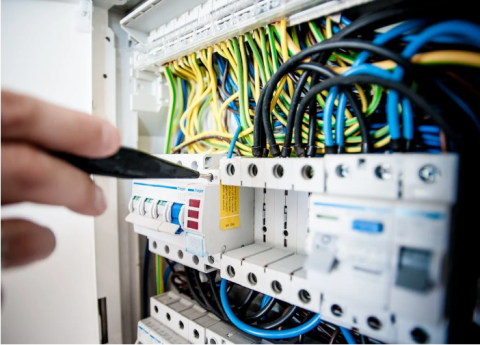
A miniature circuit breaker (MCB) protects the wiring on its circuit from carrying more current than the cable is rated for. When the current exceeds the breaker's rated capacity, it trips and cuts the supply to that circuit. This is the protection working correctly; the problem that needs diagnosing is whatever caused the excessive current in the first place.
Overloaded circuit
This is the most common cause of a tripping breaker. If a circuit is being asked to supply more power than it was designed for — often because too many high-draw appliances are connected to a limited number of sockets — the breaker will trip when the cumulative demand exceeds its threshold. The immediate fix is to spread the
load by moving some appliances to a different circuit. If this is a recurring pattern, adding a new circuit is the proper long-term solution.
A faulty appliance
If the trip happens consistently when a specific appliance is in use, that appliance is a strong suspect. Unplug it and test the circuit with something else. If the breaker
stops tripping, the appliance has a fault, either an internal short circuit or failing insulation, and needs repairing or replacing rather than continuing to use.
A short circuit in the wiring
A short circuit occurs when a live conductor comes into direct contact with a neutral conductor, usually as a result of damaged insulation, a deteriorated connection, or a
failure inside a socket or fitting. Short circuits produce a large and sudden current surge, which trips the breaker immediately and forcefully. They tend to be more
serious than overloads and require an electrician to trace and repair the fault.
A ground fault
A ground fault occurs when a live conductor makes contact with an earthed surface: the metal chassis of an appliance, a damp wall, a conductive floor in a kitchen or
bathroom. Where RCD protection is in place, the RCD will typically respond to this type of fault before the MCB. Ground faults in wet areas are particularly dangerous
and should be investigated as a priority.
A worn or faulty breaker
Circuit breakers are mechanical devices, and they have a finite service life. A breaker that trips at low load, trips without an obvious cause, or repeatedly trips despite there being no identifiable fault on the circuit may itself be the problem.
Replacing a single MCB is a straightforward job that can make a significant difference.
When to stop resetting and call an electrician
- The same breaker trips more than once or twice without a clear cause
- You notice a burning smell or scorch marks near the consumer unit or any socket on the affected circuit
- The breaker trips the moment it is reset, before anything is switched on
- You are not confident identifying which of the above scenarios applies
I cover Bedfordshire and can usually turn fault-finding work around quickly. Call me on 07881 627 423 or send a message, and I will get back to you.